Which format solves which problem?
Reverse chronological: the clear standard
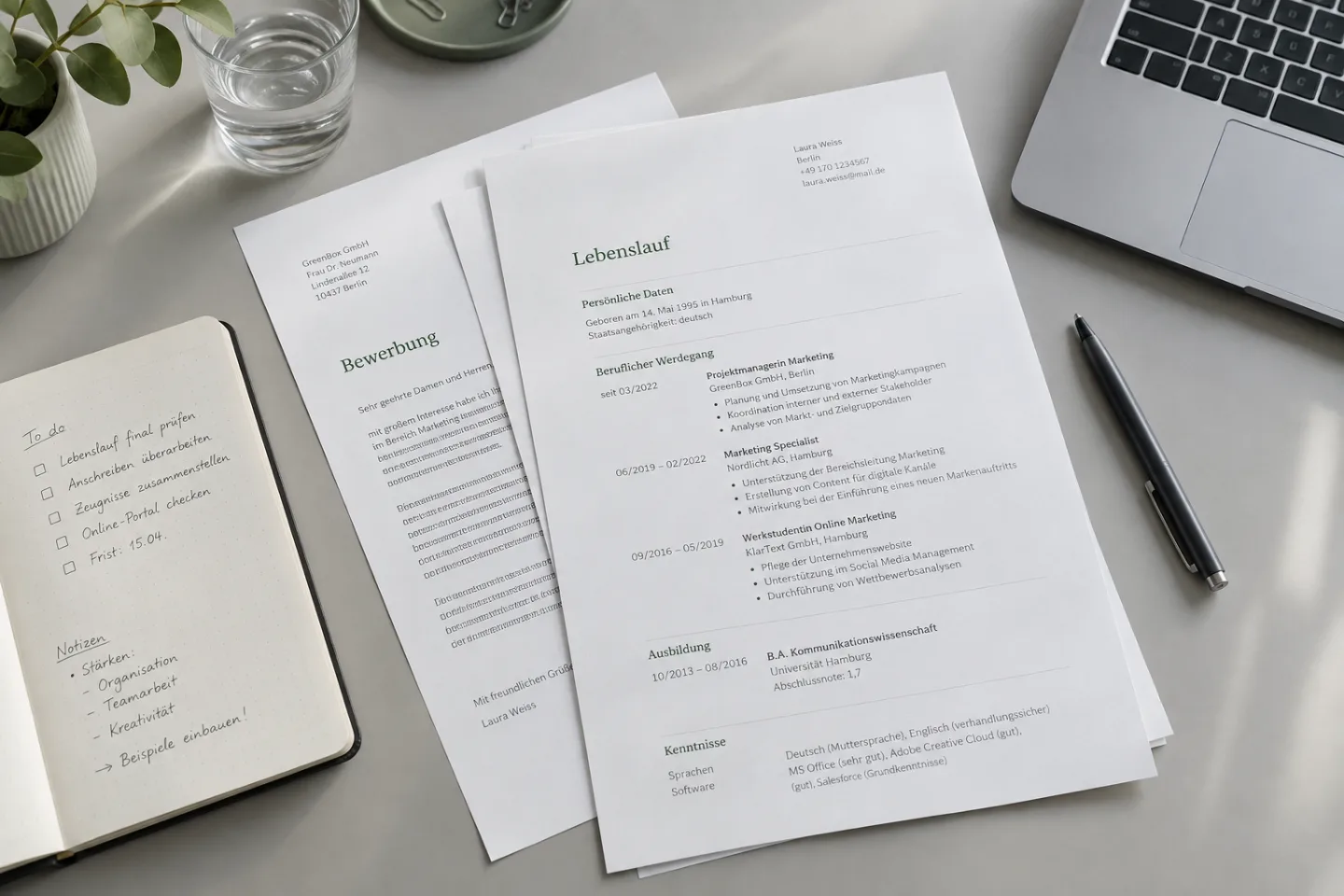
The current or most recent role comes first. Earlier positions, education, and matching skills follow. The format makes professional development and dates easy to understand. It is especially suitable when your most recent experience fits the target role.
Example: A marketing manager applies in marketing again. Her current campaign work belongs at the top; an earlier internship can stay short. Inside each role, the most relevant contributions come first, not necessarily the oldest tasks.
Combined: explain skills, keep roles visible
A short profile or selected skill fields stand before the chronology. That can help with a career change when the connection to the new role would otherwise be hard to see. The complete roles with dates stay in place. A skills block without examples you can check is, by contrast, only a list of claims.
Example: An event coordinator is looking for project coordination. He briefly leads with scheduling, vendor management, and budget overview, then proves these skills in the actual positions.

Functional: only with a good reason
A functional resume sorts mainly by skills instead of by employers. That can be a narrative aid in special situations, but it often makes dates and development harder to follow. For many applications, a combined structure is the better bridge: it explains the direction and still keeps the chronology.
Try your format with someone who does not know your background. Can they recognize your current role, the most important experiences, and the sequence of time in a few seconds? If not, simplify.
Test the format in the finished file
Check the file in PDF format at a normal screen size and on a smartphone. Copy the text into a simple text field as a test: do name, roles, and dates stay in a sensible order? No template guarantees the same processing in every application portal. Always follow the format requirements of the posting.
KEEP WORKING
Give your experience a clear structure.
Start with your current role. Note the title, dates, and two concrete contributions. Only then choose the matching layout.