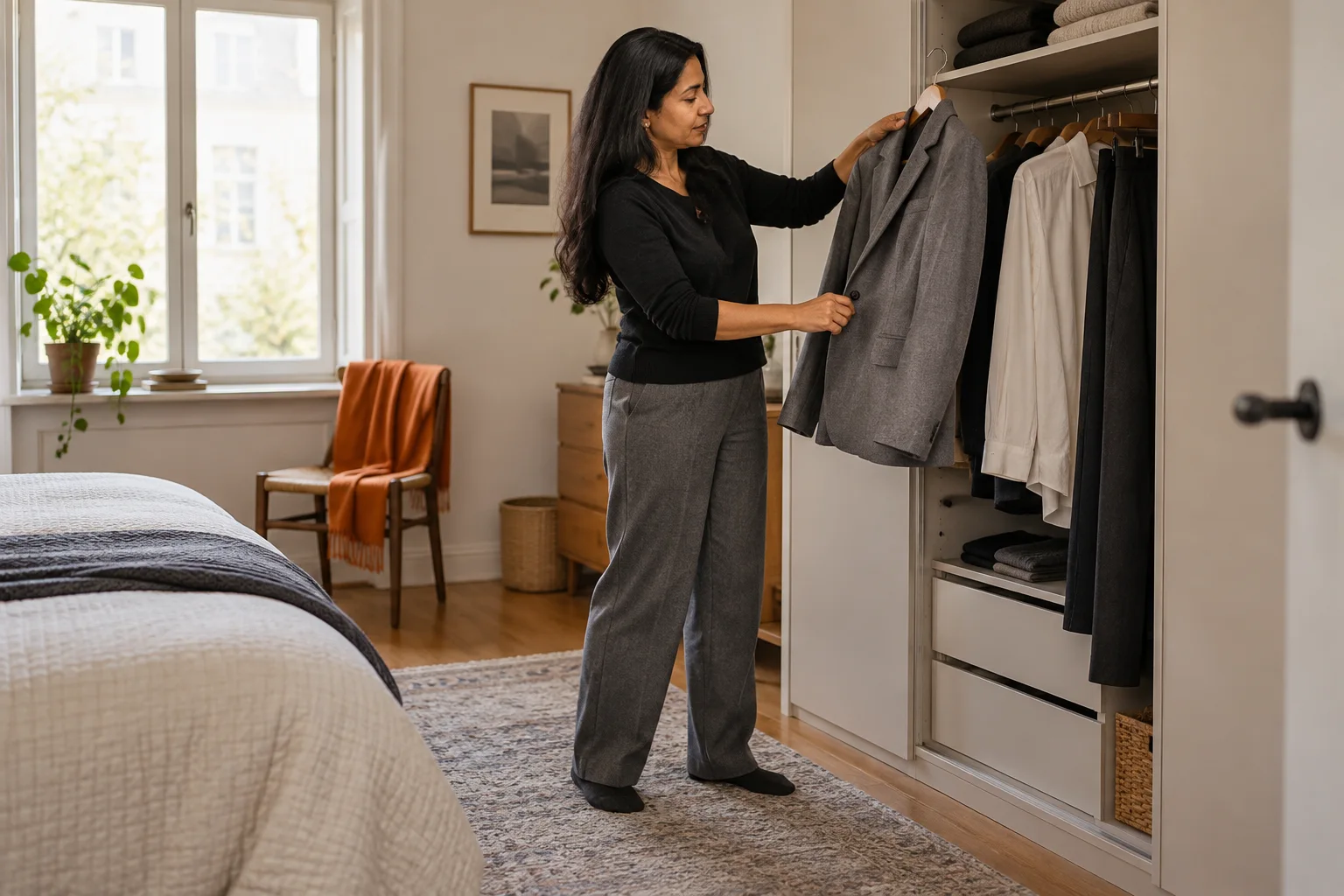
A job interview outfit should suit the confirmed setting and let you focus on the discussion. Read the invitation, clarify any specific expectations and start with familiar clothes you already own. Try the complete combination while sitting and walking, then include your bag, outer layer and travel plans. Buying something unfamiliar is not automatically more professional. No particular suit, color or pair of shoes guarantees an offer.
Identify the appointment before choosing the clothes
An office conversation, a meeting followed by a workplace tour and a video call do not necessarily call for the same preparation. Read the invitation first. Where will you meet? Does it describe anything beyond a seated discussion? Has the organizer supplied an explicit clothing instruction? These details are more useful than assuming that every employer expects the same uniform.
The Texas A&M Career Center discusses researching expectations and wearing clothes that feel comfortable in its student career guidance. Those ideas are useful here; its more detailed clothing recommendations are not a universal rule for every country, employer or role. Company photographs also need interpretation: a marketing image or celebration may not show what this particular meeting requires.
If the invitation leaves an important question open, ask the person arranging the interview: “Is there a particular dress expectation for the meeting or tour?” Keep the question brief and practical. There is no need to send photographs of your clothes or explain your entire budget.
Keep preparing the conversation itself. Our job interview preparation guide helps you plan examples and questions. Clothing is one small practical decision, not a substitute for understanding the role.
Build your job interview outfit from familiar pieces
Set out two or three pieces that could work with the information you have confirmed. Check their actual condition. Is a fastening loose, does something need cleaning or is a seam uncomfortable? Addressing one small issue in advance may be more useful than replacing an entire outfit. Do not wait until the morning to discover whether the chosen clothes are ready.
A suit, a particular kind of shoe or a new matching set is not an automatic purchase requirement. If a clearly stated expectation cannot be met with what you have, consider whether a suitable borrowed option is available before spending. Borrowed clothing still needs a practical test: the label on a jacket does not tell you whether you can sit comfortably in it.
You also do not need to choose solely from rigid lists divided by gender. Aim for an appropriate combination that you can wear without feeling that you are performing another identity. Personal and cultural elements are not automatically problems to remove. This guide cannot resolve an individual disagreement about clothing or replace advice on a specific legal issue.
Once you have a workable choice, prepare a simple alternative for a small mishap. That might be one clean compatible top rather than a second complete outfit. A short, usable backup is more helpful than keeping ten equally uncertain combinations in play.
Sit, walk and use your bag before the day
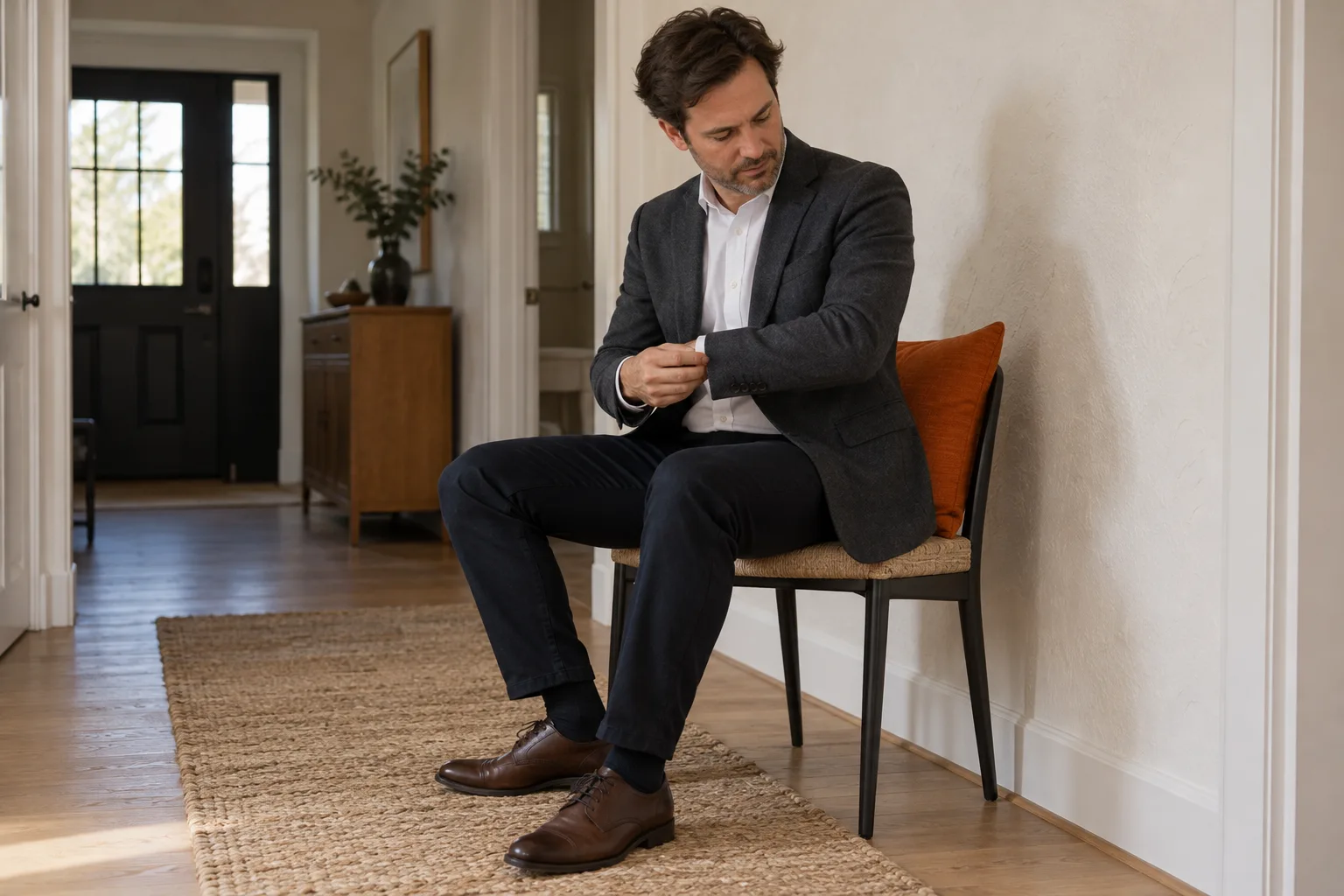
Try the whole combination, including shoes. Sit on an ordinary chair for a few minutes, stand up and move your arms as you would during a conversation. Can you listen without constantly pulling at a hem or adjusting a sleeve? The purpose is to check function and comfort, not to judge your body against somebody else's photograph.
Walk a short distance on a surface similar to the route you expect to take. Shoes that seem comfortable while standing still may become distracting outside. If you would spend the journey worrying about each step, test a familiar alternative. A brand, heel height or high price does not demonstrate your ability to do the job.
Add the bag and any outer layer. Can you take out a document without emptying everything onto the floor? Can you carry the coat comfortably when you reach the building? A quick rehearsal can reveal these ordinary difficulties before they become another concern at the appointment.
If you want another person's opinion, ask a specific question: “Does anything look as though it keeps slipping or getting in the way when I move?” General judgments about your shape are not useful feedback. Stop once the combination works; repeated inspection is not the goal.
Example one: A formal expectation has been confirmed
In this fictional example, Alex has an interview with a consultancy and the invitation explicitly asks for formal clothing. Alex already owns suitable dark trousers, a plain shirt and a familiar jacket. Initially, however, the plan is driven by an assumption that expense and novelty will make a stronger impression.
I will buy a striking new outfit and wear new shoes for the first time at the interview. Spending more and looking different must make me look more professional.
I will use the confirmed formal expectation, try my trousers, shirt and jacket together while seated and wear familiar clean shoes. I will check the clothes and bag before the day.
The revised plan does not promise a better hiring result. It removes avoidable uncertainty without making a purchase evidence of commitment. If the existing jacket restricts movement or genuinely does not meet the confirmed setting, Alex still needs a workable alternative. Calling a garment formal does not make it suitable in practice.
This is a decision for one described appointment, not a rule about every consultancy or office. Without the explicit instruction, Alex would first need to clarify the setting rather than infer a complete dress code from an industry label.

Example two: Casual photographs leave a real question open
Jamie, another fictional applicant, has been invited to a conversation followed by a tour. The company's website shows employees in varied everyday clothes. It does not explain which areas the tour will include or whether visitors receive particular instructions. Jamie initially treats the photographs as if they answer those questions.
The photos look relaxed, so any casual clothes will do. I will not ask about the tour because that might make the clothing decision seem too important.
I will ask the organizer about the tour and any relevant clothing instructions. Then I will choose a familiar, tidy combination and test the shoes, movement and bag.
Jamie does not need to invent safety requirements or buy specialist equipment on speculation. The organizer needs to explain the arrangements for the actual visit. A workplace photograph cannot replace that information, and a general article cannot provide site specific instructions.
The practical question remains separate from professional suitability. Jamie still prepares truthful examples of relevant work. The revised plan supports attendance at a particular appointment; it is not a strategy for manufacturing an ideal personality through clothes.
Plan the journey alongside the clothes
A short walk from a car and a journey involving several connections create different practical demands. Check the current forecast yourself before the appointment and decide whether you need an outer layer or rain protection. You may remove these at the destination, but you still need a sensible way to carry or store them.
If you intend to change something after travelling, identify a realistic place and allow enough time. Do not build the entire plan around finding an empty, suitable space at the last moment. A simpler combination that works for both the route and meeting may require less attention than a complicated change of clothes.
Put the documents you actually need in the bag ahead of time. Our guide to application documents helps with that separate decision. Check that you can retrieve them easily and that unrelated confidential papers are not mixed in as loose sheets.
Keep the address, time and organizer's contact details clear. When you organize your applications, attach these details to the correct appointment. A carefully selected jacket cannot make up for travelling to the wrong venue.
For video, test the actual camera view
For a video interview, choose a complete comfortable combination and try it at the seat you will use. Look at the actual camera view with the intended lighting. A pattern or color can appear different on screen, but that is a reason to test it, not to adopt a universal ban on particular clothes.
Can you sit naturally without repeatedly adjusting the top? If you briefly stand up, will the rest of the outfit create unnecessary worry? Check whether an accessory rubs against the microphone or makes a noticeable sound when you move. Change what actually interferes with your own test.
Keep this rehearsal short. A clear conversation and a usable setting matter more than creating a perfectly coordinated production. Do not use appearance filters to pretend to have a different body or presentation. The test should reduce practical distractions, not create a new performance requirement.
If you have specific needs or a question about the format, discuss the arrangements with the organizer. General clothing guidance cannot know every applicant's circumstances. Its useful role is to help you check the situation, not to prescribe one appearance for everybody.
Finish the decision with one final check
Where practical, lay out the chosen clothes the day before. Check the small set of things you can actually control. Once they work, finish the decision. Another image search just before leaving does not automatically improve the outfit and may reopen questions you have already resolved.
Ready for the appointment
- The invitation and any explicit clothing instructions have been checked.
- Questions about the meeting or tour have been clarified.
- The complete combination is clean and usable.
- Sitting, walking and arm movement have been tested.
- Shoes, bag and outer layer work for the journey.
- A simple alternative covers a small mishap.
- For video, the camera view and movement sounds have been checked.
- Preparation for the discussion is complete independently of clothing.
A workable outfit settles an organizational question. It says nothing about a person's value and cannot replace knowledge or experience. No suit, color or shoe guarantees an invitation or offer. The aim is to give the actual conversation your attention.
Frequently asked questions
Do I have to wear a suit?
Not as a universal rule. Read the invitation and clarify the actual setting. A confirmed formal expectation needs different planning from an appointment described differently. Ask the organizer when an important detail is unclear.
Do I need to buy new interview clothes?
Start with suitable clothes you own and check their condition and function. Buying something unfamiliar on speculation does not prove professionalism and may add practical uncertainty.
How can I ask about the dress code?
A brief question is enough: “Is there a particular dress expectation for the interview or planned tour?” Ask the person organizing the appointment rather than sending unsolicited outfit photographs.
Which interview shoes should I choose?
Choose shoes that suit the confirmed appointment and work for your actual route. Test familiar clean options while walking. This guide does not prescribe a particular brand or heel height.
Should I dress differently for a video interview?
The meeting’s setting still matters. Also test the real camera view, seated comfort and sounds from accessories. A complete comfortable combination avoids additional worry if you stand up.